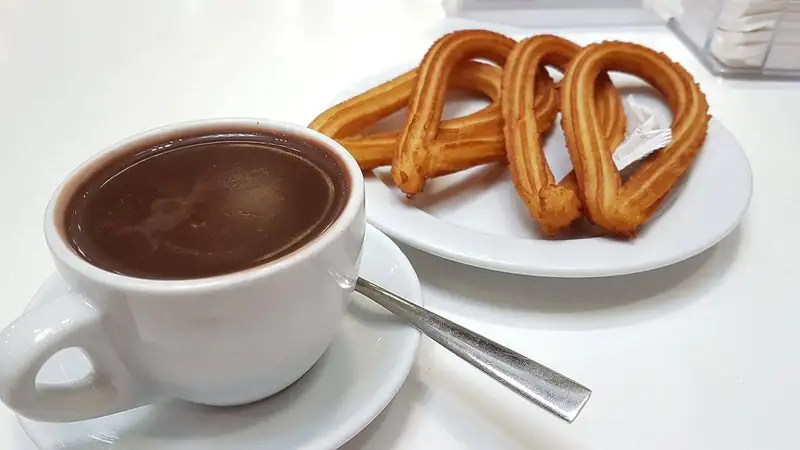
Gustar works like the English to please: the thing you like is the subject, and the person who likes it is shown with a pronoun (me, te, le, nos, os, les). So the verb agrees with the thing, not the person: me gusta el café (one thing), me gustan los libros (more than one), me gusta bailar (an activity).
Think “it pleases me”
English says I like coffee: I am the subject. Spanish says me gusta el café, which is literally coffee pleases me. Coffee is the subject, so the verb follows coffee.
- Me gusta el chocolate.I like chocolate (chocolate pleases me).
- Me gustan las películas de terror.I like horror films (horror films please me).
- Me gusta leer y cocinar.I like reading and cooking (activities take the singular).
- No me gustan los lunes.I don't like Mondays.
The pronouns
| Who likes it | Pronoun | One thing / activity | More than one thing |
|---|---|---|---|
| (a mí) | me | me gusta | me gustan |
| (a ti) | te | te gusta | te gustan |
| (a él / ella / usted) | le | le gusta | le gustan |
| (a nosotros) | nos | nos gusta | nos gustan |
| (a vosotros) | os | os gusta | os gustan |
| (a ellos / ellas / ustedes) | les | les gusta | les gustan |
A mí, a ti, a Laura: adding emphasis or a name
Because le and les can mean several people, Spanish often adds a + person for clarity or emphasis. The pronoun stays, even when you add the name.
- A Laura le gusta el fútbol.Laura likes football.
- A mis padres les gusta viajar.My parents like travelling.
- —Me encanta el jazz. —¿Sí? A mí no.—I love jazz. —Really? I don't.
- A mí me gusta el té, pero a él le gusta el café.I like tea, but he likes coffee (contrast).
Agreeing and disagreeing: a mí también, a mí tampoco
| They say | You agree | You disagree |
|---|---|---|
| Me gusta el cine. (positive) | A mí también. | A mí no. |
| No me gusta el cine. (negative) | A mí tampoco. | A mí sí. |
Do not answer yo también to me gusta. The person in a gustar sentence is a mí, not yo.
Verbs that work like gustar
| Verb | Meaning | Example |
|---|---|---|
| encantar | to love (things, activities) | Me encantan los mercados. |
| interesar | to interest | ¿Te interesa la historia? |
| importar | to matter, to mind | No me importa esperar. |
| molestar | to bother | Me molesta el ruido. |
| doler (o→ue) | to hurt | Me duele la cabeza. Me duelen los pies. |
| parecer | to seem (opinion) | ¿Qué te parece el plan? |
| faltar | to be missing, to lack | Me faltan dos euros. |
| quedar | to have left; to suit | Nos quedan diez minutos. Te queda bien. |
Gustar with people
You can use gustar about people, but it means you find them attractive. For friends and family, say caer bien: Mi jefa me cae muy bien (I really like my boss). Me gusta mi jefa would raise eyebrows.
Mistakes English speakers make
- ✗ Yo gusto el café → ✓ Me gusta el caféThe person goes in the pronoun, not the subject.
- ✗ Me gusta los perros → ✓ Me gustan los perrosPlural things take gustan.
- ✗ Me gustan bailar y cantar → ✓ Me gusta bailar y cantarActivities (infinitives) take gusta, even in a list.
- ✗ Laura le gusta → ✓ A Laura le gustaA name needs a in front of it.
Quick quiz
Gusta or gustan, and which pronoun? Open each line to check.
1.A mí ___ (gustar) las fresas.Show answer
me gustan. Strawberries are plural.
2.¿A ti ___ (gustar) nadar?Show answer
te gusta. An activity takes the singular.
3.A mis amigos ___ (encantar) la música latina.Show answer
les encanta. Les for them; la música is singular.
4.A nosotros no ___ (gustar) el frío.Show answer
nos gusta. Nos for us; el frío is singular.
5.Me ___ (doler) los ojos.Show answer
duelen. Los ojos are plural.
6.—No me gusta el pescado. —A mí ___. (you agree)Show answer
tampoco. Agreeing with a negative.
The Grammar Lab has short exercises on gustar and indirect object pronouns, explained in English.
Frequently asked questions
Why is it me gusta and not yo gusto?
Because in Spanish the thing you like is the subject. Me gusta el café literally means coffee pleases me, so the verb agrees with coffee and the person is shown with the pronoun me.
When do I use gustan?
When the thing you like is plural: me gustan los gatos. With one thing or with activities, use gusta: me gusta el gato, me gusta leer.
What is the difference between me gusta and me encanta?
Me gusta means I like it; me encanta means I love it. Encantar is already strong, so it does not need mucho.
How do I say I like a person?
For friendship, say me cae bien. Me gusta about a person usually means you are attracted to them.
Make gustar automatic
Short daily practice turns the pattern into a reflex. Free, with explanations in English.
Free forever · Non-commercial community project · No card needed
DELE Prep Academy is an independent, non-commercial practice platform. It is not affiliated with the Instituto Cervantes, and practice does not guarantee an exam result.